REVENUE SUCCESS
Customer growth is a company outcome. Customer Success is too narrow a container for it.
The Revenue Success operating model, published by Success Calibrators
THE OLD MODEL
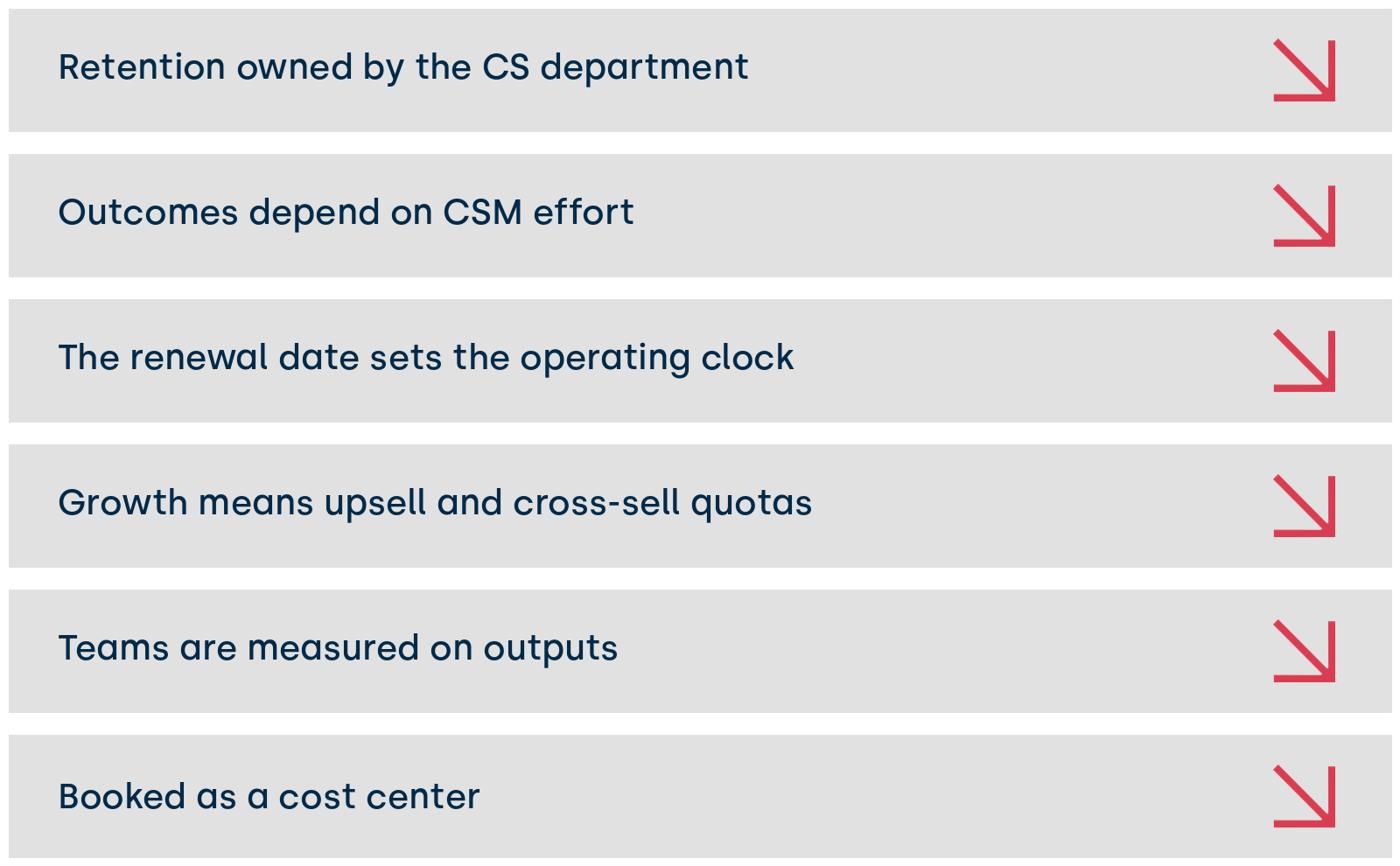
Most B2B SaaS companies run post-sale revenue on a model designed for a smaller problem.
The model fails because it is too narrow for the problem. It hands a company-wide revenue outcome to one department, then measures the department on activity. Leadership lets the department harden into a silo, then blames it when NRR misses.
ONE JOURNEY
Your customers experience one journey.
When the journey breaks, the damage never shows up neatly inside Customer Success. It shows up as slow time-to-value, weak adoption, ROI no one measured, handoffs dropping context between teams, stalled expansion, surprise churn. By the time the renewal conversation starts, the outcome is already decided.
The expansion side breaks the same way: sales pitches more product to an account still waiting on value from what it already pays for, while Customer Success works a renewal list on a separate clock. Two teams, two conversations, one customer hearing neither team knows what the other promised. No one owns the question of whether the customer is ready to grow.

THE REVENUE SUCCESS MODEL
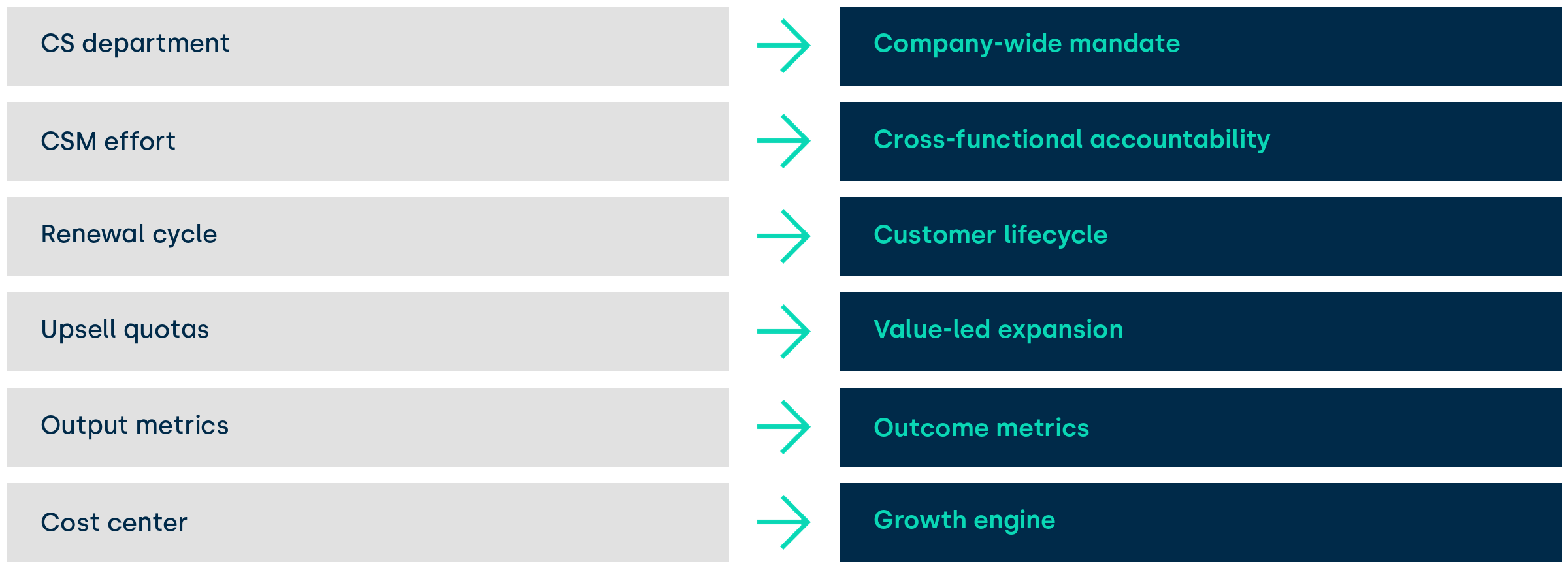
Revenue Success is the customer growth operating model. It runs your installed base with the same rigor, investment, and accountability as new-logo acquisition.
WHY NOW
In a tighter market, you won't out-acquire weak retention, and you won't spend your way past unproven value.
Expansion revenue closes faster and costs a fraction of a new logo, which makes a low expansion mix the most expensive problem on your income statement. If customers aren't expanding, at least one of these is true: you sold customers who never fit, you set expectations the product won't meet, you onboarded too slowly, you never proved ROI, your teams run disconnected across the lifecycle, or your offer creates no natural next step.
None of those problems belongs to one department. They belong to the system, which is why fixing the department has never fixed the number.
2-3x
what it costs to replace unbooked expansion revenue with new-logo acquisition
WHAT THE C-SUITE DOES DIFFERENTLY
Three moves separate companies running Revenue Success from companies running a Customer Success department
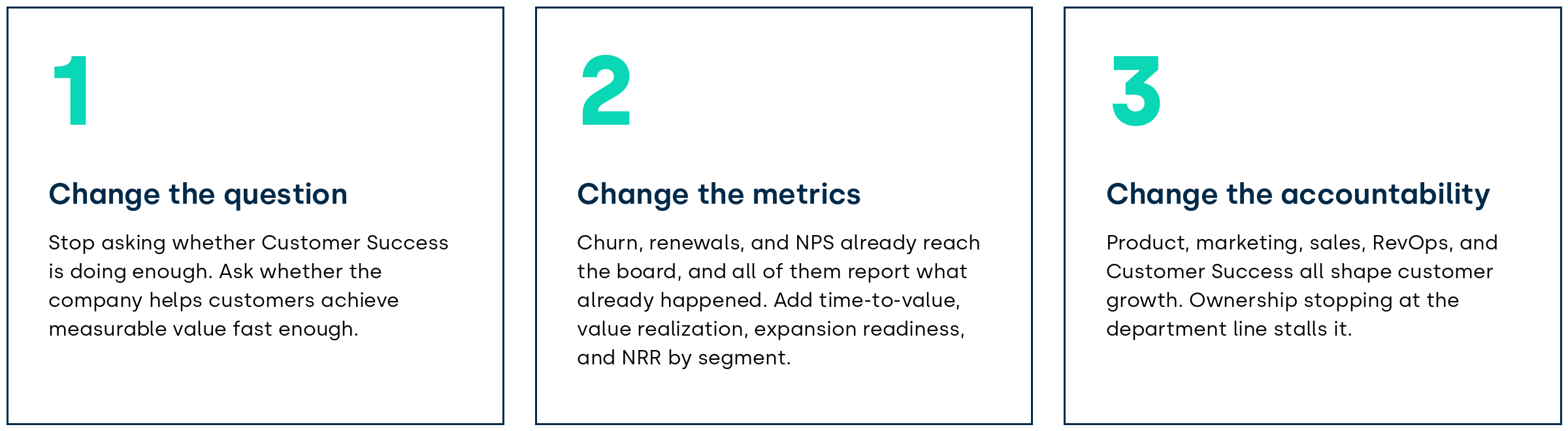
This requires the CEO and the entire C-suite. A CCO alone reorganizes a department, a CEO redesigns the operating model.
THE BOTTOM LINE
Retention is too passive and renewal too late, and a department is too small a container for customer growth.
The companies that win from here will run customer growth as a company-wide system and treat the installed base as the most efficient growth engine they own.
HOW WE OPERATIONALIZE IT
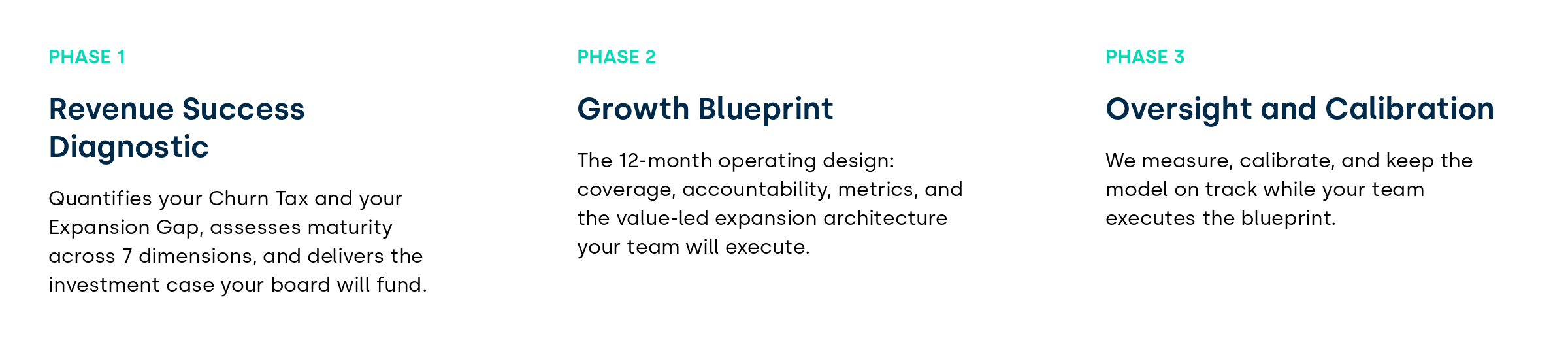
Success Calibrators delivers the Revenue Success model through a three-phase program.